Friday, November 21, 2025
Why I don't use a bivy bag or over bag under an enclosed shelter tent tarp when camping to keep water off my sleeping bag!
Following up on a social media post I made about a video by Paul Messner, wet environments and damp sleeping bags and zipping up tent inners (he had zipped himself up inside his tent and by morning his sleeping bag was quite damp from either condensation or body moisture trying to move through the bag).
My post was about venting a tent / tarp as much as possible and never doing up the inner of a tent unless you absolutely have to (the sleep system ie mat and sleeping bag keeps you warm not the inner!) due to midges or snow spindrift getting to you and always leaving the outer fly sheet door fully open unless rain is getting in or if wind is adversely affecting the integrity of the shelter then do it up but open all vents wherever possible.
On my camp I was also thinking about waterproof water resistant bivy bags in a tent or fully enclosed tarp.
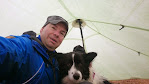
During my most recent camp on Dartmoor, mid November, where it was very damp with on and off rain, cold temperatures of around minus 3c to plus 6c, little to no wind then some wind and high humidity I encountered condensation, quite a bit, not copious, but more than usual and more than I usually get in my shelters. I thought for the fun of it I’ll use my PHD Greenlandic overbag to keep damp off the down sleeping bag quilt.
Unsurprisingly there was quite a bit of moisture (from drips and my dog shaking) on the water resistant over bag and I thought “thank goodness I am using an over bag bivy type bag in my shelter” after several hours (probably ten plus) I thought let’s have a look under it. The inside of the overbag and top of sleeping bag were both quite damp! I suspect eVent might have breathed better but is generally a bit heavier so for my use here not appropriate (it is more suited to using outside a shelter environment).
I already knew the answer but thought let’s prove it is generally better to NEVER use a bivy over bag type system under a shelter that is PROPERLY vented and shelters you from all rain as they are simply not needed (in winter I do suggest taking one for emergency use if the shelter fails to keep rain off you).
Testing my theory was doubly hard as the quilt was already damp to the touch, how will it ever dry in this wet environment, surely it will only get wetter by morning!?
Over night the quilt dried out from my own heat pushing moisture through the bag and proper ventilation on a reasonably still night until early hours where breeze picked up a bit and more air flowed under my low pitched Trailstar. The only part still a bit damp but much drier was the very foot end (PHD do supply foot end covers for this purpose - but I didn’t miss not having mine) and the main top part of the sleeping bag that had been quite damp to the touch the night before was now completely dry! All will be in upcoming video!
My conclusion is the same as it has always been! A bivy type bag is completely superfluous (indeed probably detrimental) in a shelter that keeps rain off you! You may need for snow or bugs or rain splashing in that might be different but in a shelter where none of those things can get to you which is most camps for the average person just use the sleeping bag as is. I’d go a step further and as stated by myself previously, there is no need for a waterproof resistant shell on the bag quilt either, go for the most breathable outer you can get!

Subscribe to:
Post Comments (Atom)
No comments:
Post a Comment